The Black Widow
She is two selves now. The woman she was, and the woman who remains.
Abraham & Isaac
The hand stays raised. The angel has already arrived. The inheritance is the moment between.

Black Panther
The body that refuses to be tamed. The black that was never decoration.

Storm
She does not wait for the weather. She is the weather.
The Three Yoruba Brothers
Three brothers. One inheritance. The light arranges itself around them like a verdict.
Red Man
He has seen the whole city. Now the city looks back at him.
The Grandmasters Diptych
The original paintings. One board between them.
Tòlání
A woman adorned in Aṣò ẹbí. In the folds of her Gele, a calm, assured regality.

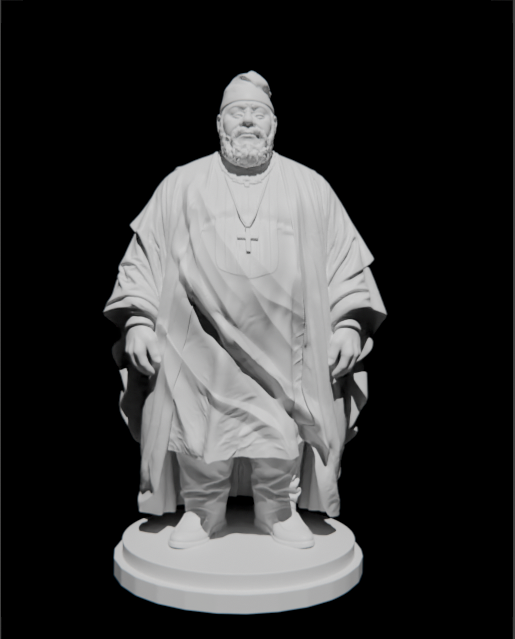
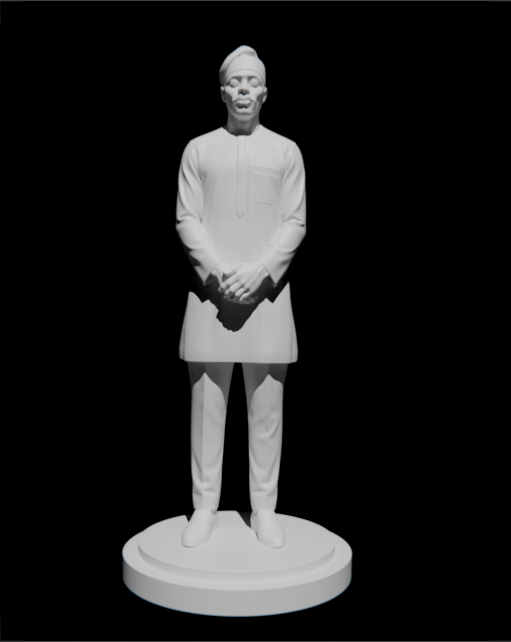
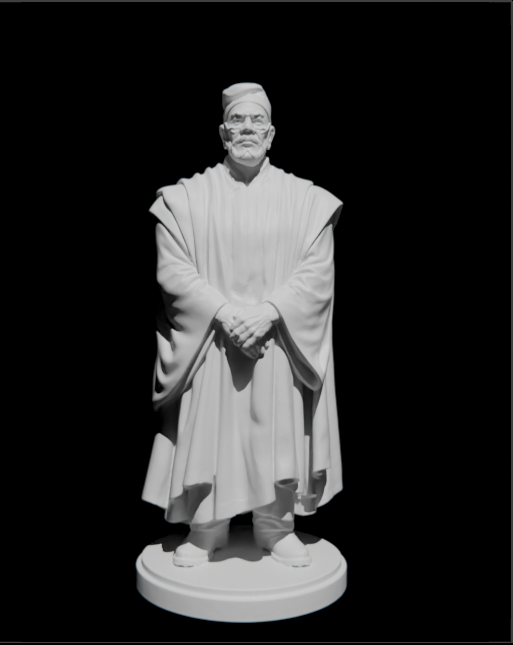
Midas Figurine

New Money Figurine

Old Money Figurine
Halimat
The daughter of the middle. The one who fights to be seen. Her gaze always outwards.
Ada
The first daughter. The one who shoulders the weight, but whose tears won't show.
Àríkè
The last daughter. She shines and glows, stepping in the footsteps of her sisters, her head held high.

The Complete Auntys
Ada. Halimat. Àríkè. All three sisters, together.

Oriana
She arrived with flowers and weather in her hair, and the room rearranged itself.
Mama Gold
She built the market and the market built the city. The cigar is hers. So is the last word.
Tutu
Enwonwu painted her, and the nation saw itself. Here she is again.

The Wedding Dinner
The table where every story meets.

The Latecomer
He missed the vows. He has not missed the meaning.

The Groom's Father
He is watching. He is remembering the day his own father watched him.
The Bridesmaid
She is beautiful in a way that costs nothing, and she knows it.

The Aunty
She knows who belongs at the table, and who came to eat anyway.

The Groom
He has rehearsed this moment a hundred times. None of them prepared him.
- Medium
- Digital painting, archival pigment on canvas
- Size
- 36 × 48 in
- Year
- 2024
- Edition
- Unique work · 1/1
- Studio of Anthony Azekwoh · Lagos · 2024
- Private collection of Yimika, 2025
Before the woman enters the room, the word often arrives first.
Widow.
Azekwoh structures the painting around that problem.
She appears against black, young, quiet, eyes lowered. A small gold cross rests at her throat. The body recedes while the face remains.
A widow is named through somebody else’s death. A major part of her identity is suddenly rewritten by an event that happened to another body.
The portrait resists allowing that status to swallow the person.
There is grief here, but no performance of grief. She does not collapse for the viewer. She does not offer suffering as spectacle.
She simply remains.
The title tells us what happened.
The face reminds us that something more survived it.